Easter Updates

April 10, 2024

A Few Days Back in Texas

Since the end of Hilary Term, quite a lot of different things have happened. I've been back in the States for a flying visit (and boy did it feel quick!). It was wonderful to be hosted at St John the Divine and speak on different topics, along with NT Wright, Jonathan Brant and Michael Lloyd. There wasn't quite time enough to say all the hellos I wanted to say, but I got in quite a few!


I also got to pop back to St. Martin's, preach at Riverway and say hello to many of my old colleagues. It really was fab to be back and I really enjoyed getting to preach on John 3 (including v.16!). One of the great joys (and sometimes challenges) of preaching from my perspective is that of being changed and shaped by the passage you're preaching on in the process of preparing the message. I have often done the groundwork several days out in preparation for a sermon and may even have a draft of a sermon I want to preach. But it's not the sermon. This was one of those late bloomers (probably not helped from the jetlag), but spending time in John 3 (and the end of John 2!) opened my eyes to things I hadn't noticed before and I still feel the impression it made on me.


If you'd like to take a listen you can watch it here:

If video doesn't play, click here: https://www.facebook.com/watch/?v=925581062610150


First Parish Communion

One of the hopes that I have for being back in the UK, especially now I don't work Sundays, is to be able to help different churches in the area by stepping in and offernig cover where needed and getting a sense of where theological education can best serve the real needs of the local church. That said, I didn't think it would begin so quickly or in quite the place that it did...! 


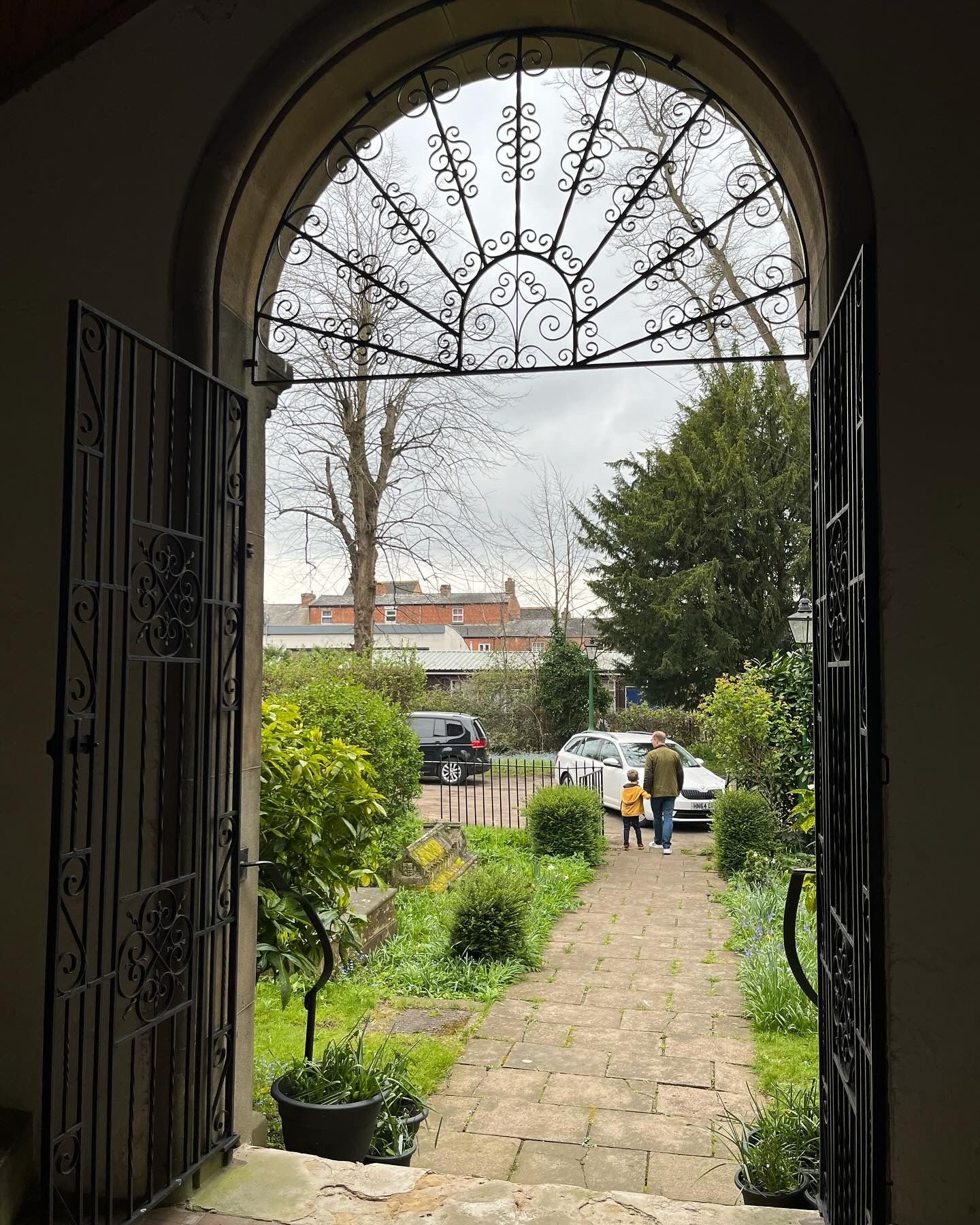
I was asked by a colleague about a parish in the area needing help on Easter Sunday. Of all the places I thought it could be, I didn't expect where it was - my home church of St Clement's. This is the place I was baptised, confirmed and even where Stephen and I got married! It wasn't where I first preached, but it was where I first led a service in my teenage years (they had a monthly youth-led service). It holds a lot of memories and a precious place in my heart, so it was a real full circle moment to be back there and leading Communion on Easter Sunday! And not only that, but because my ministry to date has all been based in the Episcopal Church, this actually was my first ever Eucharist in a Church of England parish. God certainly has a sense of humour.


It was very special to be back, to see some old faces as well as new ones. It was lovely. Their new vicar (US: priest) started this week and I pray this next season of life would be a good one both for him and the for the church community.


Lastly...

The Easter break has been a good one. I've been able to do a little work on editing my manuscript for a monograph of my PhD thesis. I've also done a LOT of marking for the Introduction to Old Testament course that students taking the BTh programme complete in their first year of study. Students complete essays on topics that include questions like:


  • Compare the two creation accounts in Genesis 1 and 2
  • What was the role of an OT prophet?
  • What does it mean for God to "harden Pharaoh's heart" in the Book of Exodus?

They also submit a 1,500 word exegesis on an OT text, e.g. Genesis 3, 12 or Isaiah 6 or 51. It's a tough job to say a lot about these texts in such a short space, but they manage it!


I've also started preparations for some material on looking at how we tell and retell biblical stories: something to think about both with respect to how the Bible uses its own stories and some good stuff to get thinking about in terms of preaching and how we handle the biblical text in the pulpit (even if often a metaphorical pulpit in England).


Next week is 0th week ("noughth"), which means it's a week before the normal term starts, but there's teaching to be done (including a class from me on Anglicanism in North America!) as well as a 3 day workshop on preaching. Do pray for all the students and staff as they begin a new term—especially those students who are going to be preparing to head off into ministry this summer.


****** 


By Suse McBay April 14, 2026
A few weeks ago, I got to sit down via the wonders of the internet and have a catch-up with my friend and former colleague, Wayne Watson. We talked God, life, and the universe. And Winnie the Pooh! In Wayne's own words " What begins as lighthearted conversation between old friends quickly unfolds into a thoughtful and wide-ranging exploration of culture and the pursuit of God's truth. " It was fun. If you fancy a listen, check out the podcast (and the entire series) by clicking here ! ******
deute
By Suse McBay April 8, 2026
***** I’ve long noticed that the Bible that gets preached from the Sunday pulpit can be, well, a bit picky. Some bits are kept in and preached. Others are studiously ignored. The result? Different churches can give quite a different sense of what the Bible's message is than if you actually read it through cover to cover. Now I don't mean to accuse any one wing of the church: whether your tradition uses the lectionary (usually a three-year cycle of curated readings) or jumps around the canon to whichever biblical book or theme is of interest, certain parts of the Scriptures are often ignored. Some passages are cut off halfway through; others are omitted entirely. I remember preaching on Independence Day in the US (the irony of doing so as a Brit was not lost on me). The reading for the day began in Deuteronomy 10:17: “For the LORD your God is God of gods and Lord of lords, the great God, mighty and awesome, who is not partial and takes no bribe, who executes justice for the orphan and the widow, and who loves the stranger, providing them food and clothing…” Sounds lovely, right? Well, yes—but Deuteronomy 10:17 starts in the middle of a paragraph. In the middle of divine instruction that God gives through Moses. We can see this in how it begins: for the LORD your God.. . It could also be translated because the LORD your God … This passage is the explanation for something. It is a why to a biblical command, not a standalone theological statement. So what’s the actual command? What’s the main message God wants the people to hear? The verse before (v.16) says this: “Circumcise, then, the foreskin of your heart, and do not be stubborn any longer.” The purpose of this speech? To call God’s people to repentance. To change. The ‘heart’ in biblical texts usually refers to one’s innermost self. The seat of who you are in the deepest places of your will and desire. God has said he wants their obedience (v.12), he has reminded them of his extraordinary generosity in choosing them as his people (vv.13–15), but here God lands a punch: The centremost part of who you are, God says, needs to be clipped. Reading vv.17–22 feels quite different in light of the whole text. It’s not a statement of a good God whom we should simply ‘fear’ and ‘hold fast to’ (v.20). It’s far more rooted and real than that. In reading through all ten verses, we get a sense of a people who have become too big for their boots. Who have forgotten that it’s not because they have anything to offer that God chose them, but rather because of the graciousness of God. And we get a clear call from God that such people need to, in essence, sort themselves out. Be humbled. Circumcise their hearts. I don’t believe the Sunday lectionary was formed with a conspiratorial agenda to omit the hard stuff (the whole thing would largely be read through in the daily lectionary for the Daily Office). But I do believe it’s spiritually dangerous for us to ignore the material that is left on the cutting room floor in our preaching. The people of God are called to grow into the fullness of the gospel—to become mature Christians. If we only ever swim in the protected waters of the lectionary, we will not be confronted by the reality of a God who regularly and reliably calls his people to humble themselves, care for those in need, and live lives of sacrificial love. Who makes space within their communities for the vulnerable. Who looks out for the marginalised among us. Who deals with the darkest and ugliest of human evil. Who redeems out of family lines and dynasties most of us would give up on. In recent years, there has been increasing focus on the importance of the gut–brain connection. How what you eat shapes who you are, and how you function mentally, emotionally, and physically. What we fuel ourselves with matters. The same is true spiritually. The Bible is the spiritual equivalent of a Whole30. Or a wholemeal, organic, seed-infused sourdough loaf. It’s nutritious and gritty. It requires some chewing. It’s not always easy to digest. But it provides the minerals and nutrients we need. It may take some adjustment, but it may also be just what the doctor ordered. Not for our physical sicknesses, but rather our more pernicious spiritual malaise. ******

Join us in Oxford in 2025!

Subscribe to

My Newsletter

Sign up here to receive quarterly updates (and occasional other news blasts) about how ministry is going and our move to the U.K.